The Happy Plate Method: A Calm Way to Feed Picky Eaters
Tired of mealtime battles? Learn the Happy Plate Method, a gentle, pressure-free way to feed picky eaters that builds confidence, safety, and calmer family meals.
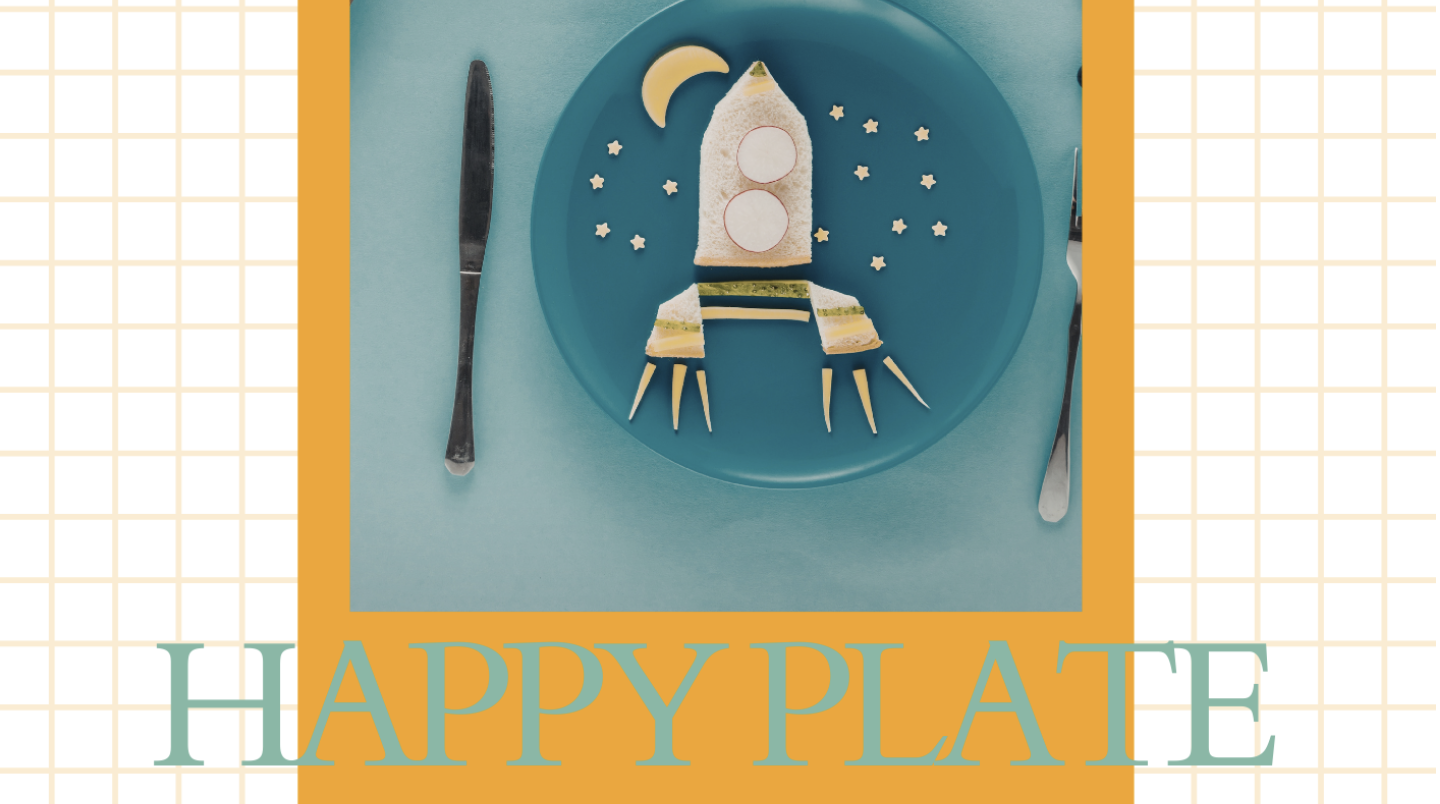
If mealtime in your house feels like a power struggle… you’re not alone.
The sighs. The negotiations. The “just one more bite” you swore you wouldn’t say again.
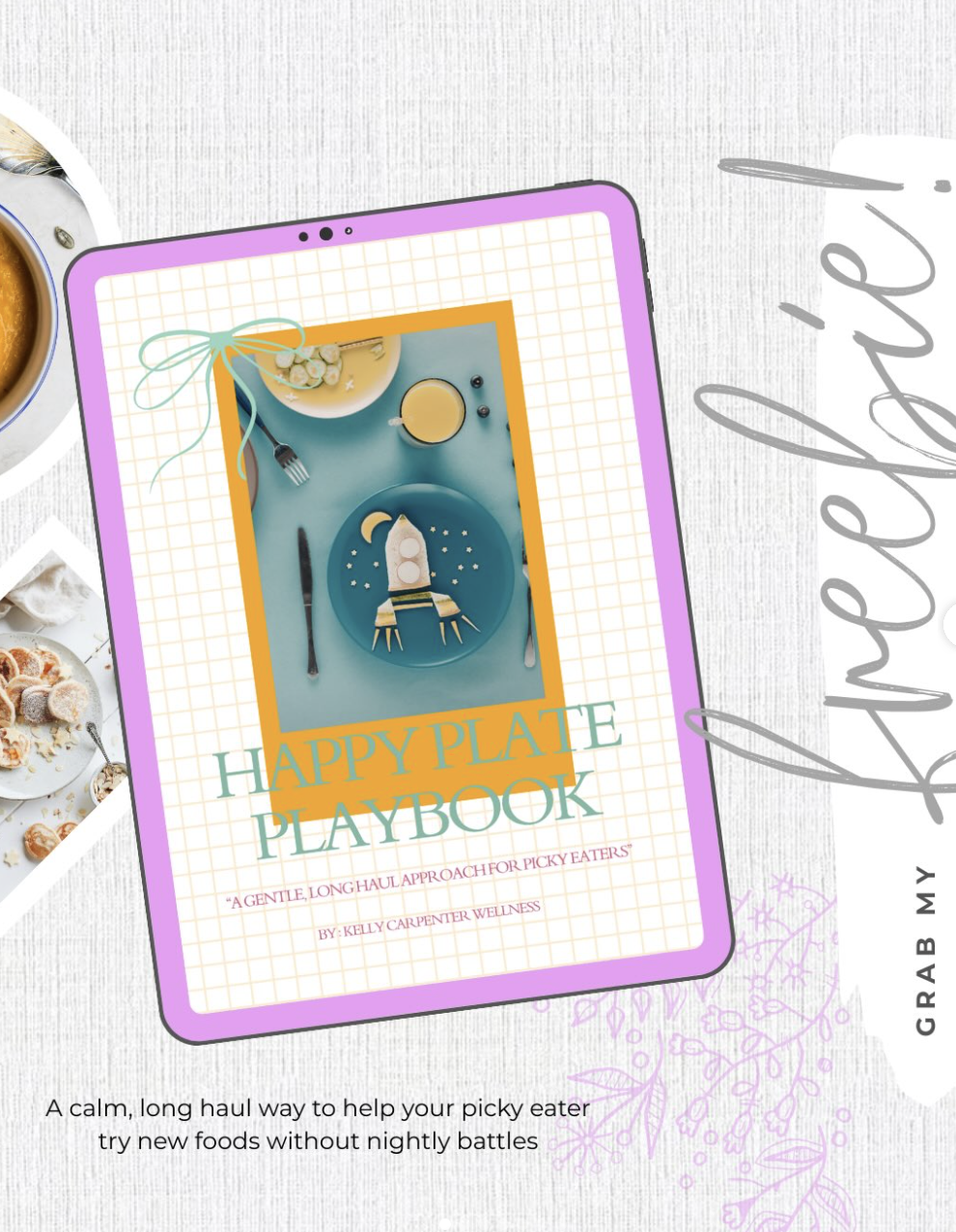
That’s exactly why I created the Happy Plate Playbook.
As a board-certified holistic nutritionist for kids (and a mom who’s been in the trenches), I know this: picky eating isn’t about bad parenting or stubborn kids. It’s about nervous systems, safety, and pressure on both sides of the table.
What most families don’t need is new recipes.
They need a method.
So what is the Happy Plate Method?
It’s a gentle, realistic way to build your child’s plate so that:
Your child feels safe
You feel calm
And everyone leaves the table a little more regulated
No bribing.
No begging.
No “just try it.”
How to Build a Happy Plate
Every Happy Plate includes:
1. A “safe” food
This is something your child already eats without stress.
Think: chicken nuggets, buttered pasta, apple slices, toast, crackers.
2. A “learning” food
This is a food your child doesn’t accept yet.
Maybe a new veggie, fruit, or protein.
3. Optional: a fun food or dip
This keeps things playful and lowers the pressure.
Ranch, ketchup, Greek yogurt, hummus…. and yes, these can be purchased clean or organic.
That’s it. No fancy meals required.
What Progress Actually Looks Like
Here’s the most important part:
Your child does not have to eat the learning food for this to work.
Looking at it counts.
Smelling it counts.
Touching it counts.
Licking it counts.
All of that is progress.
A Happy Plate tonight might look like:
Chicken nuggets (safe food)
Roasted carrots (learning food)
Ketchup for dipping (fun food)
You’re still serving one family meal, you’re just building their plate with more intention.
What Do You Say at the Table?
Less talking about the food usually means less pressure.
Try simple phrases like:
“Here is dinner.”
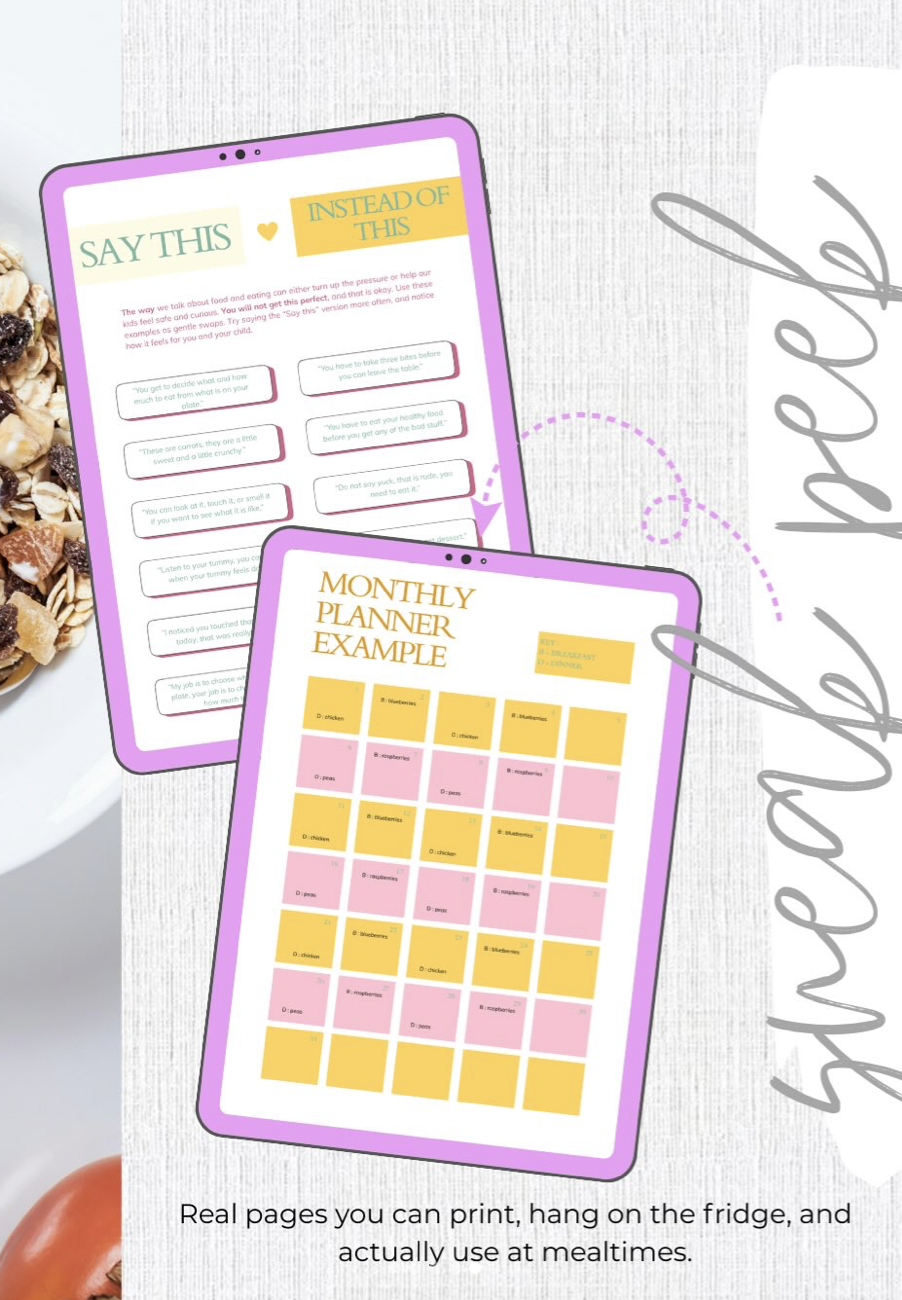
“You get to decide what and how much you eat.”
“You don’t have to try everything.”
If they say “yuck”?
“It can just stay on your plate.”
“Your job is to listen to your tummy. My job is to choose what goes on the plate.”
You stay calm.
The plate stays the same.
Plan Your Month, Not Your Meal

Picky eating doesn’t change in one bite, it changes over time.
Here’s a simple rhythm:
Choose two learning foods per week
One shows up at breakfast
One shows up at dinner
Safe foods stay consistent.
Learning foods repeat gently.
Nervous systems stay regulated.
Why This Works
When kids see the same learning foods over time, and without pressure, their brain slowly shifts from “this feels scary”to “I know this one.”
That’s when touching turns into tasting.
That’s when fear turns into curiosity.
You’re not forcing bites.
You’re building comfort through calm, consistent exposure with enough breaks that it never feels overwhelming.
A Gentle Reminder
I know how heavy it feels to try for years to help your child eat better.
The Happy Plate Method won’t fix everything overnight but with consistency, most kids grow more confident and less fearful around food. And that kind of change lasts.
If you’re ready to start, grab my free Happy Plate Playbook a step-by-step guide that walks you through the method and helps you track progress with printable pages you can hang on the fridge or use at mealtime.
You are doing an incredible job. Even on the hard nights.
💡 Follow @kellycarpenterwellness for more holistic nutrition and wellness tips.
Looking for more kids nutrition and wellness topics on the blog? Check out these articles!